 How-to
How Long Garage Door Springs Last in Humid Climates
Last Updated: November 22, 2026
Quick Summary
Garage door springs in humid climates often last less time than their cycle rating suggests, because moisture speeds up rust on the coil. Spring life depends on how many cycles the door runs, the door's weight, and how well the spring is protected. Wear can appear well before the rated cycle count is reached.
- Standard springs are rated for about 10,000 cycles; high-cycle springs for 25,000 to 50,000.
- Divide the cycle rating by your daily cycle count, then by 365, for a rough estimate of years.
- Humidity causes corrosion on the coil, and salt air near the coast can speed this up.
- Torsion springs are often more protected from moisture than extension springs, which run along the track.
- Never adjust, remove, or replace a spring yourself; call a trained technician instead.
Table of Contents
- How Long Garage Door Springs Last in a Humid Climate
- Cycle Ratings and What They Mean for Years of Use
- How Humidity Causes Metal Oxidation in Garage Door Springs
- Torsion Springs Versus Extension Springs in Humid Conditions
- 50,000 Cycle Garage Door Springs: Are They Worth It Near the Coast?
- Garage Door Spring Maintenance Tips for Humid Climates
- Signs of a Broken Garage Door Spring and When to Call a Pro
- Garage Door Spring Replacement Cost and Booking Your Next Step
- Frequently Asked Questions
How Long Garage Door Springs Last in a Humid Climate
Garage door springs in humid climates can last less time than the cycle rating suggests, because moisture speeds up rust. Wear may show well before the rated cycle count is reached.
Spring life depends on how many times the door opens and closes, how heavy the door is, and how well the spring is kept. Humidity shortens life by causing corrosion on the coil. A M&M Garage Doors guide to high-cycle torsion springs describes torsion springs rated for 25,000 to 50,000 cycles, but that rating assumes the spring stays protected from moisture.
A single year count can mislead you. Two households with the same spring can see very different results based on use and conditions. Treat any calendar estimate as a rough guide, not a promise.
Cycle Ratings and What They Mean for Years of Use
A cycle is one full open and close of the door. Standard springs are rated for about 10,000 cycles, and high-cycle springs are rated for 25,000 to 50,000.
To estimate years, count how many times your door cycles in a typical day, then divide the rating by that daily count and by 365. A door opened four times a day reaches 10,000 cycles in roughly seven years. The same door on a high-cycle spring has far more room to run.
- Count your daily door cycles, including trips out and back in
- Divide the spring rating by your daily count
- Divide that result by 365 to get rough years
- Cut the estimate further if the garage is humid or near the coast
How Humidity Causes Metal Oxidation in Garage Door Springs
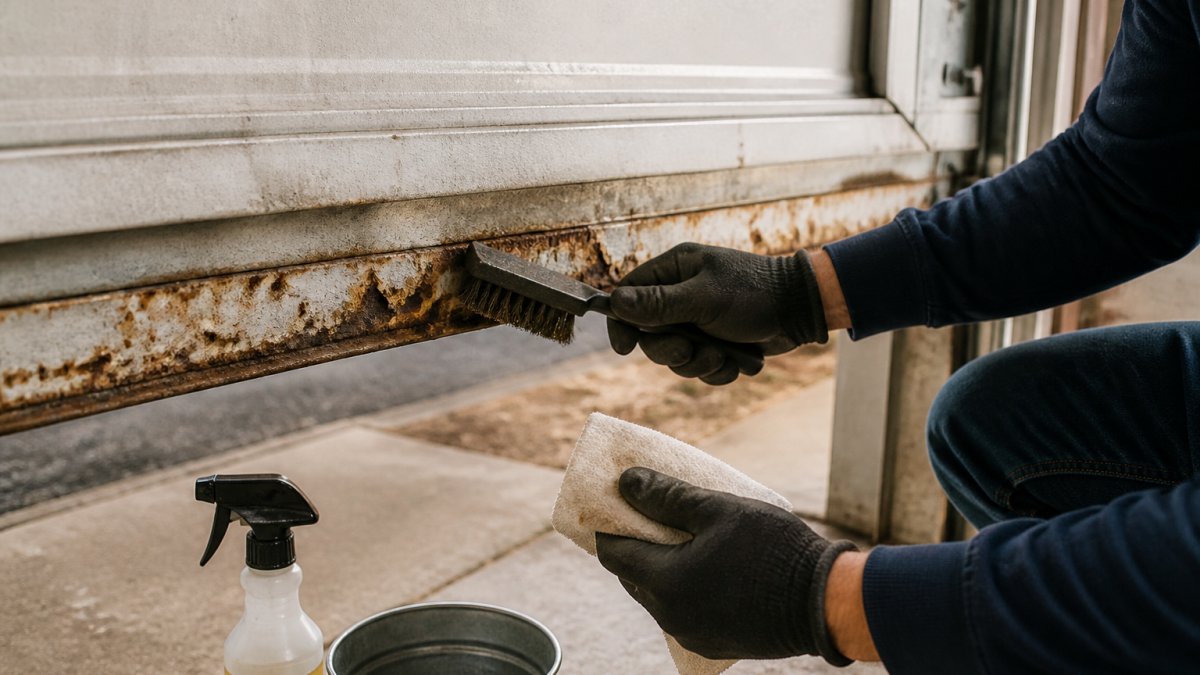
Humidity causes steel springs to oxidize, which is the chemical process that forms rust. Moisture in the air reaches bare metal, and the protective coating on the spring wears away over time. Once rust forms, it can pit the coil and weaken the steel.
Salt air near the coast can accelerate the oxidation reaction, so a spring in a coastal garage may show orange flaking sooner than one kept inland.
A single calendar estimate can mislead, because cycle count, spring finish and exposure all change how long a spring lasts. Your daily cycle count and the spring's finish move the result in either direction.
You can turn the rating into a rough personal estimate. Divide the spring's cycle rating by your average daily open-and-close count, then divide by 365. Then discount for humidity and salt exposure based on what you see on the coil.
Look for orange or brown flaking on the coil as an early warning sign. Surface discoloration that wipes off is generally cosmetic; pitting, flaking, or a visible gap in the coil calls for a closer look. If you are unsure which you are seeing, have a qualified technician look at it.
Torsion Springs Versus Extension Springs in Humid Conditions
Torsion springs mount above the door and wind up to lift it. Extension springs run along the sides of the track and stretch as the door opens. In humid conditions, torsion springs are often more protected, because their coils sit in one place above the door. Learn why garage door springs break more often in Florida and how to prevent it. Extension springs run along the track and can be more exposed to moisture.
Neither type is maintenance-free. Check both kinds for rust at least twice a year.
50,000 Cycle Garage Door Springs: Are They Worth It Near the Coast?
A high-cycle spring can last longer than a standard spring on a busy door. Near the coast, though, the higher rating only helps if the spring stays protected from salt and moisture. Ask about corrosion-resistant coatings before you buy.
For most homes that open the door only a few times a day, a standard spring with good maintenance is a reasonable choice. Heavy daily use is where the high-cycle option makes the most sense.
Garage Door Spring Maintenance Tips for Humid Climates
Regular care slows rust and extends spring life, but in a humid, coastal climate the timing matters as much as the task. A workable schedule for Tampa Bay homes is to do a light visual check monthly during the wet season (roughly June through September), a fuller inspection each spring and fall, and a professional tune-up once a year.
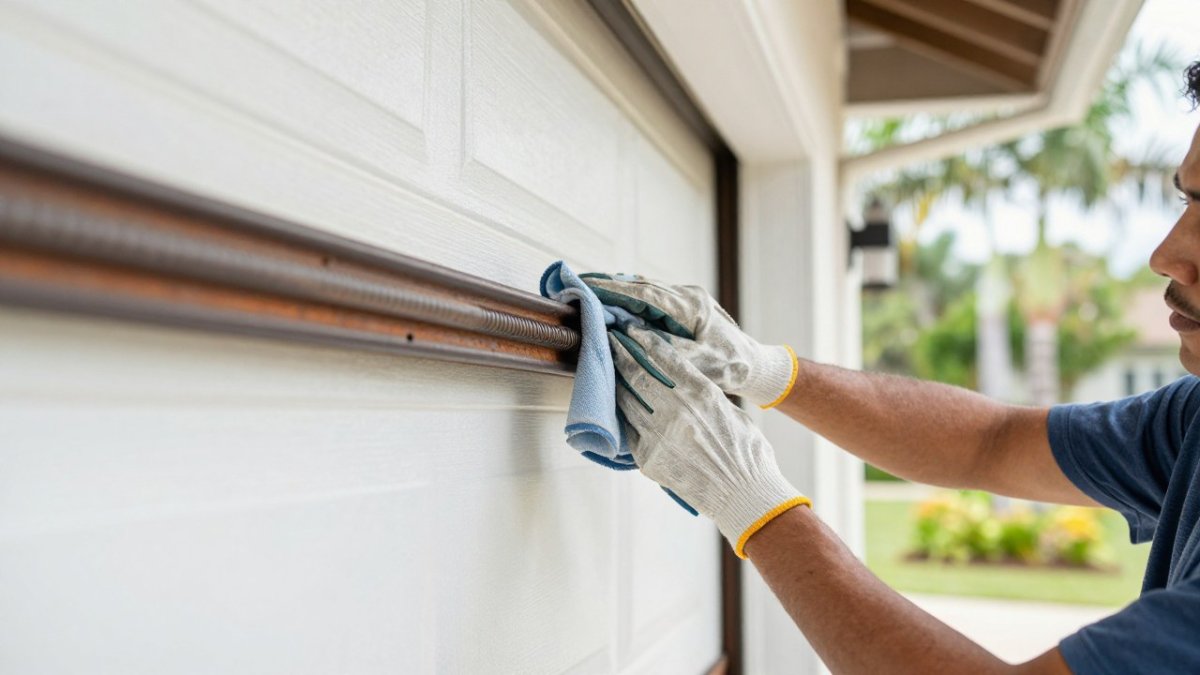
What a homeowner can safely do:
- Wipe springs with a dry rag every few months to remove salt film and dust
- Apply a light garage door lubricant to the coils, not to the door tracks
- Look for orange or brown rust spots, flaking, or a visible gap in the coil
- Check that the door balances evenly when lifted halfway by hand
- Run ventilation or a dehumidifier in the garage during wet months
- Keep the garage door closed during blowing rain and salt spray events
What a homeowner should not do: never adjust, remove, or replace a torsion or extension spring yourself. Springs store a large amount of tension, and an unexpected release can cause serious injury. Visual inspection and lubrication are the safe limits; winding, unwinding, and replacement are technician work.
Watch out: a spring that looks only lightly rusted can still be near failure, so do not assume a cosmetic wipe-down means the spring is sound. If the door feels heavier than usual or sits crooked, stop using it and call a technician.
Material and finish choices matter more in humid and coastal climates than in dry ones. When you talk to an installer, ask what corrosion-resistant coating or finish the replacement spring carries, and whether it is suited to a salt-air environment. A higher cycle rating only helps if the coating survives the humidity.
A yearly professional tune-up can include a spring inspection, which may catch early corrosion before it becomes a failure. Pair that with your own monthly visual checks and the spring has the best chance of reaching its rated cycles.
Signs of a Broken Garage Door Spring and When to Call a Pro
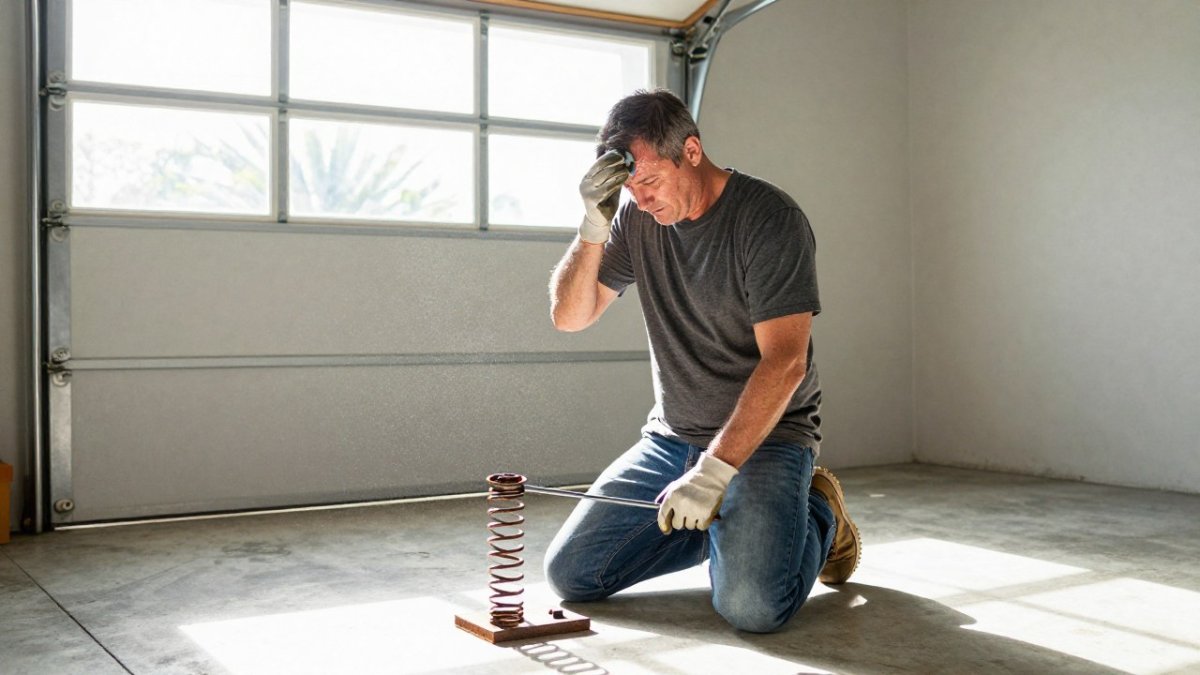
A broken spring often makes a loud bang, and the door may stop opening. Other signs include a door that sits crooked, a visible gap in the spring coil, or a door that feels much heavier to lift by hand.
Never try to adjust or remove a spring yourself. Springs store a large amount of tension, and an unexpected release can cause serious injury. If you spot any of these signs, U.S. Consumer Product Safety Commission guidance on garage door safety recommends calling a trained technician.
Watch out: Do not stand under a door with a suspected broken spring, because the door can drop without warning.
To get the spring fixed, request a garage door spring repair from our team.
Garage Door Spring Replacement Cost and Booking Your Next Step
Replacement cost depends on the spring type, the door weight, and the parts needed, so a quote is given before any work begins. Trinity Garage Door Service is a family-owned business licensed and insured in Florida, and offers upfront pricing with same-day service when possible.
If your spring is worn, rusted, or broken, get a garage door spring repair or book a yearly garage door tune-up to keep the door safe. You can also review garage door types and styles if you are weighing a new door with a high-cycle spring.
Frequently Asked Questions
How often should garage door springs be replaced?
Replacement timing depends mainly on cycle count and how often the door is used. A standard spring is commonly rated around 10,000 cycles, and a high-cycle spring is rated for 25,000 to 50,000 cycles. In a humid climate, moisture and corrosion can shorten that range, so a homeowner should have springs inspected regularly and replace them when rust, gaps or uneven door movement appear rather than waiting for a set number of years. A technician can inspect your springs, and a quote is provided before any work begins.
Do garage door springs get weaker over time?
Yes. Torsion and extension springs lose tension gradually with each open-and-close cycle, and corrosion from humidity or salt air speeds up that wear. A weakened spring may still hold the door but make it lift unevenly or strain the opener. Because a spring under high tension can cause serious injury if it breaks during handling, spring testing and replacement should be left to a trained technician rather than attempted by a homeowner.
Should I spray WD-40 on my garage door spring?
WD-40 is a penetrating cleaner and is not a long-term lubricant for garage door springs. Springs in humid or coastal areas need a dedicated lubricant designed for garage door hardware, applied to the coils according to the manufacturer's guidance. Wiping away surface rust and reapplying lubricant as part of routine maintenance helps slow corrosion.