 How-to
How to Stop Garage Door Noise: 7 Quiet Fixes
Table of Contents
- Why Your Garage Door Makes Noise (and Which Sounds Matter)
- Garage Door Lubrication Guide: The Right Products for Quiet Operation
- Best Garage Door Rollers for Noise Reduction: Nylon vs. Metal
- How to Tighten Garage Door Hardware and Fasteners
- Adjusting Tracks, Springs, and Opener Tension to Stop Garage Door Noise
- Soundproofing an Attached Garage: Acoustic Decoupling and Insulation
- When to DIY vs. Call a Pro (and a Maintenance Schedule That Works)
- Frequently Asked Questions
Last Updated: September 27, 2026
Why Your Garage Door Makes Noise (and Which Sounds Matter)
Garage door noise is the sound of metal parts rubbing, vibrating, or coming loose as your door opens and closes. At Trinity Garage Door Service, we hear the same story from homeowners: the door worked fine for years, then started groaning, squealing, or banging.
The fix depends on the sound. A squeal usually means dry metal. A rattle points to loose fasteners. A grinding noise often comes from worn rollers or an opener under strain.
Here is how to tell them apart:
- Squeal or squeak: metal-on-metal friction in hinges, rollers, or springs
- Rattle or clatter: loose bolts, nuts, or door panels
- Grinding: worn rollers, bad bearings, or opener gear trouble
- Banging or popping: torsion springs or cable issues (stop and call a pro)
- Humming with no movement: opener motor or limit switch problem
One note before you grab a wrench: springs, cables, and bottom brackets sit under extreme tension. The U.S. Consumer Product Safety Commission garage door safety guidance warns that these parts can cause serious injury. Lubrication and tightening are safe DIY jobs. Spring and cable work is not.
Garage Door Lubrication Guide: The Right Products for Quiet Operation
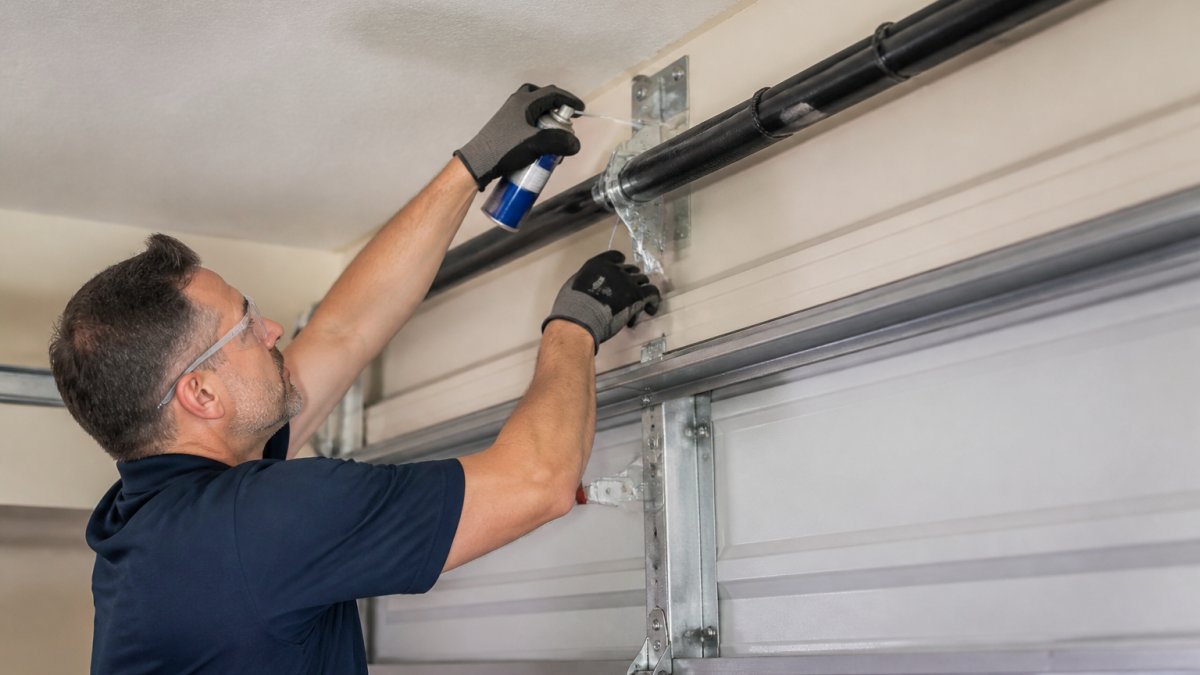
The best lubricant for a garage door is a silicone-based or white lithium grease spray. Never use WD-40 as a lubricant; it strips existing grease and leaves metal dry.
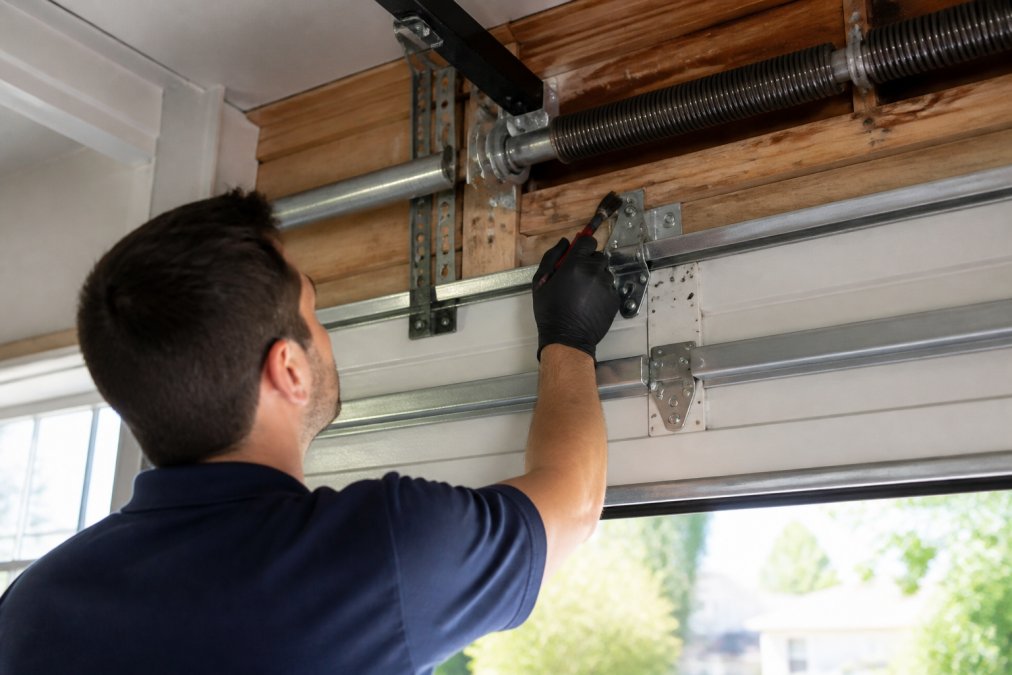
Apply lubricant to these points every six months:
- Roller stems and bearings (not the wheels themselves)
- Hinges, especially the ones that fold
- Torsion springs and bearing plates
- The opener's drive rail and carriage
- Lock and handle mechanisms
Wipe off excess spray. Extra grease attracts dust, which turns into grit and speeds up hinge wear. A common mistake is spraying the tracks. Tracks should stay clean and dry, not greasy.
Best Garage Door Rollers for Noise Reduction: Nylon vs. Metal
Rollers are the single highest-impact noise upgrade on most doors. A standard steel roller is a metal wheel spinning on a metal stem inside a metal hinge, three metal-on-metal contact points per roller, and a typical seven-foot door uses ten to twelve of them. Nylon rollers replace the wheel-to-stem contact with a self-lubricating polymer surface, which is why they are the first swap most technicians recommend.
| Roller Type | Noise Level | Lifespan | Best For |
|---|---|---|---|
| Steel (standard) | Loudest | Long | Rarely used doors, detached garages |
| Nylon (solid) | Quietest | Long | Most homes, bedrooms above the garage |
| Nylon with steel core | Quiet | Longest | Heavy doors, daily use, insulated panels |
| Plastic (budget) | Moderate | Short | Temporary or budget repairs |
Two details the table hides:
- Stem length matters more than material. Rollers come in short-stem, long-stem, and various stem diameters. Buying the wrong stem length means the roller sits crooked in the track, which creates a new rattle. Measure an existing roller's stem before ordering, or bring one to the hardware store.
- Nylon is not silent, it is quieter. It removes the metal-on-metal squeal, but a worn track or loose hinge will still rattle. Rollers fix roller noise, not every noise.
Replacing rollers is a beginner-friendly job, but the sequence matters:
- Close the door and disconnect the opener so it cannot cycle.
- Clamp locking pliers on the track above the bottom roller to keep the door from sliding down.
- Bend the track tab outward with a flathead screwdriver, just enough to clear the roller stem.
- Slide the old roller out, slide the new one in, and bend the tab back.
- Work one roller at a time, bottom to top, so the door never loses support.
Budget about 10 minutes per roller for a first-timer.
How to Tighten Garage Door Hardware and Fasteners
Loose fasteners cause most garage door rattles, and tightening them takes about 15 minutes with a socket set.
Work through the door with the power off:
- Tighten all hinge bolts, but leave the bottom bracket alone.
- Snug the bolts on the roller brackets and bearing plates.
- Check the bolts holding the track to the wall and ceiling.
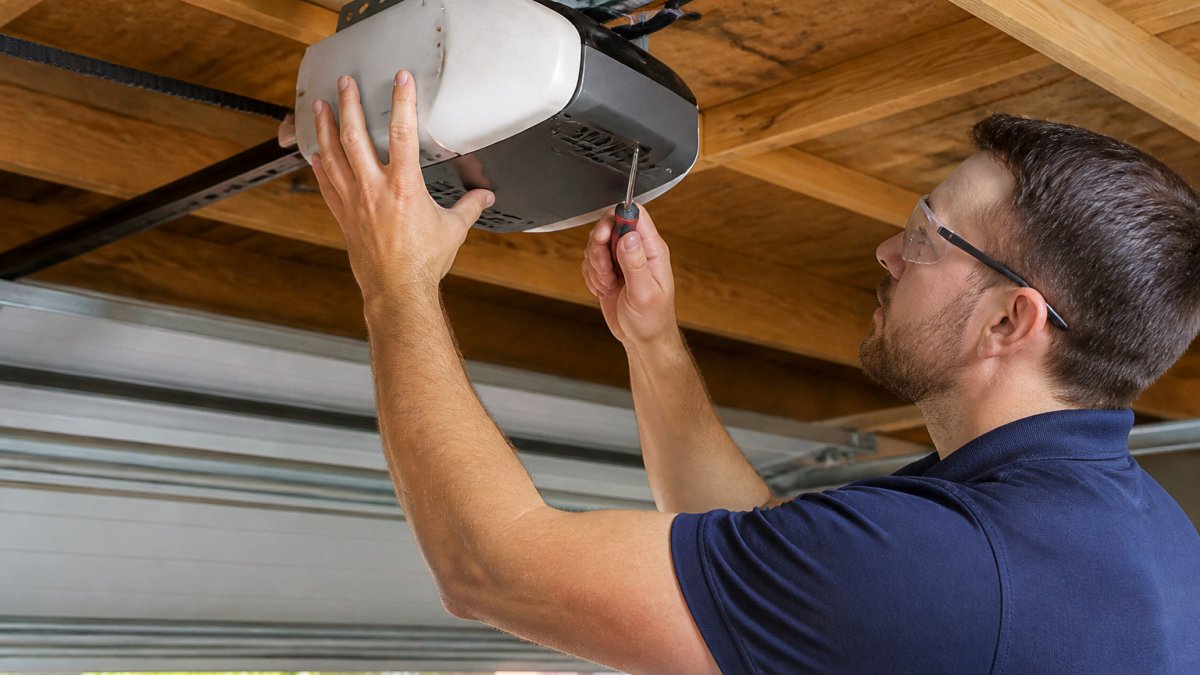
- Tighten the opener's mounting bolts and the carriage bolts on the drive rail.
- Replace any bolt that will not hold torque; stripped fasteners mean a worn hole.
Adjusting Tracks, Springs, and Opener Tension to Stop Garage Door Noise
Track alignment, spring balance, and opener tension settings all affect how loud your door runs. Most of this work is pro-only, but you can safely check a few things yourself.
Safe DIY checks:
- Look for gaps between the track and the door rollers
- Listen for chain slap on chain-drive openers
- Check that the opener's limit switch stops the door at the right height
Soundproofing an Attached Garage: Acoustic Decoupling and Insulation
Soundproofing an attached garage means blocking sound at three points: the door panel, the shared wall, and the vibration path into the house.
When to DIY vs. Call a Pro (and a Maintenance Schedule That Works)
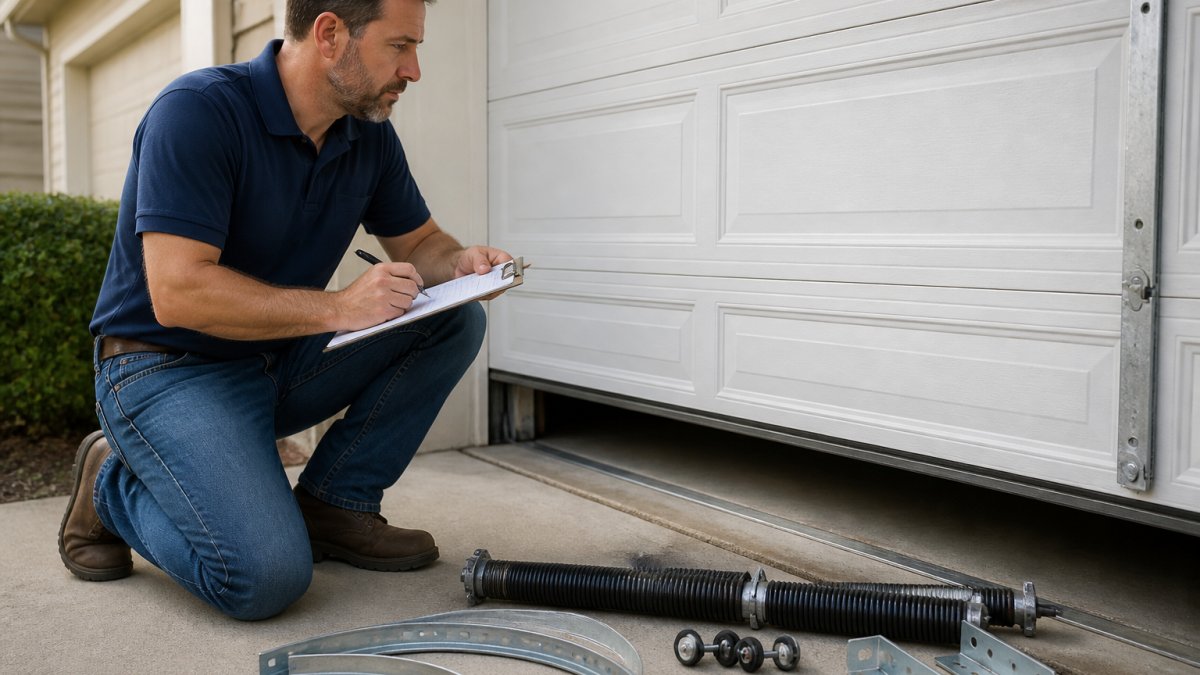
Most guides blur the line between "annoying" and "dangerous." The honest threshold is simple: if the repair requires you to release or support the door's stored energy, it is a professional job. Torsion springs, extension springs, cables, and bottom brackets hold hundreds of pounds of tension even when the door is closed. The U.S. Consumer Product Safety Commission garage door safety guidance treats these components as a serious injury hazard, and that is the line to respect.
Safe DIY jobs (no stored energy released):
- Lubricating hinges, rollers, and bearing plates
- Tightening hinge, bracket, and track bolts
- Swapping rollers with the door locked and the opener disconnected
- Replacing weatherstripping and bottom seals
- Testing safety sensors and the auto-reverse function
- Cleaning and aligning photo-eye lenses
Pro-only jobs (stored energy or door weight involved):
- Adjusting or replacing torsion or extension springs
- Replacing or tensioning cables
- Straightening a door that is off track or hanging crooked
- Replacing bottom brackets or the center bearing plate
- Any opener repair that requires disconnecting the door from the drive
Call a professional immediately when you see or hear:
- A snapped torsion or extension spring
- A door that is off track or hanging crooked
- Cables that are frayed, slack, or snapped
- Grinding from the opener with the door disconnected
- Any repair that needs the door's weight supported
Seasonal Maintenance Checklist
A schedule prevents noise from returning. Print this and stick it inside the garage door frame:
Monthly
- Listen for new sounds on the first open and close of the day
- Test the safety sensors by blocking the beam with a broom handle
- Test the auto-reverse by placing a 2x4 flat under the door
- Wipe dust and grit off the tracks with a dry cloth
Every 6 months
- Lubricate hinges, roller stems, bearing plates, and the opener rail
- Tighten all hinge, bracket, and track bolts with a socket set
- Check the door balance: disconnect the opener, lift the door halfway, and let go, it should stay put
- Inspect rollers for flat spots, chips, or wobble
- Check weatherstripping and bottom seal for cracks
Annually
- Professional tune-up, balance check, and cycle-count review
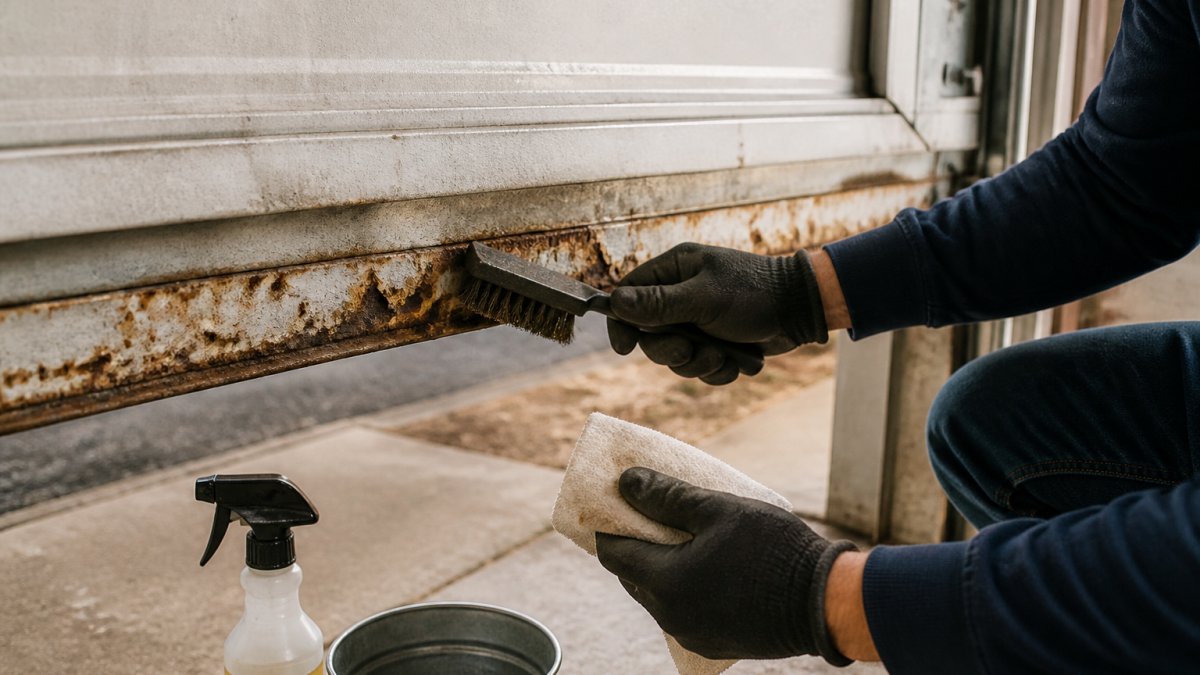
- Inspect springs and cables for rust, fraying, or gaps
- Re-lubricate the torsion spring and bearing plates
- Check the opener's force and limit settings
Frequently Asked Questions
Why is my garage door so loud when I open it?
The most common causes are lack of lubrication, worn metal rollers, loose hardware, and unbalanced springs. Metal-on-metal contact between rollers and tracks creates grinding and squealing. If your door has chain-drive opener, chain slap adds to the noise. Start by lubricating all moving parts with a silicone-based lubricant, then check for loose bolts and worn rollers. If the noise persists, the torsion springs may need adjustment by a professional.
Can I use WD-40 to quiet my garage door?
No. WD-40 is a solvent, not a lubricant. It strips away existing grease and leaves metal parts dry, which increases friction and attracts dust. For garage door noise, use a silicone-based lubricant or white lithium grease on hinges, rollers, and springs. Avoid spraying lubricant on the tracks themselves; they should stay clean and dry to prevent roller slippage.
What are the quietest garage door rollers?
Nylon rollers with sealed bearings are the quietest option for noise reduction. They absorb vibration better than metal rollers and do not require lubrication. Steel rollers with nylon tires are a close second. When replacing rollers, choose ones rated for your door's weight and cycle count. Nylon rollers typically last 2-3 times longer than standard metal rollers and can reduce noise significantly.
When should I call a professional for garage door noise?
Call a professional if you hear a loud bang, snapping sound, or if the door becomes difficult to lift. These indicate broken torsion springs, which are dangerous to replace without proper tools and training. Also seek professional help if the door is off-track, the opener strains, or you see frayed cables. For routine noise like squeaks, DIY lubrication and tightening often solve the problem.
Garage door noise rarely fixes itself, and the longer you wait, the more parts wear out. Trinity Garage Door Service can quiet your door with a professional tune-up, nylon roller upgrade, or belt-drive opener install. You get upfront pricing, licensed and insured technicians, and same-day appointments when your door will not wait. Request service today and get your garage quiet again.