 How-to
Why Is My Garage Door Uneven? Tampa Homeowner Guide
Last Updated: November 21, 2026
Quick Summary
A garage door uneven is almost always caused by a worn or broken part in the lifting system, not the door itself, most often loose hinges, damaged cables, weak springs, or bent tracks. A door that sags at one corner points to a hinge or spring problem, while one that binds halfway up usually means worn rollers or a bent track. Stop using the door and call a pro if you see a broken spring, snapped cable, or a side that drops fast.
- Salt air near the coast corrodes hinges, rollers, and cables faster, throwing off alignment.
- Test balance by lifting the door to waist height and letting go; a balanced door stays put.
- An even gap on both sides means the floor settled, not the door alignment.
- Tap a small track dent back with a rubber mallet only while the door is closed and opener off.
- Fix the door's alignment first, then set the opener limits, never force a crooked door closed.
Table of Contents
- Common Causes of an Uneven Garage Door
- Tampa Conditions That Make a Garage Door Crooked
- Safe Diagnostic Checklist: Inspect the Door While It Is Closed
- Garage Door Uneven at Bottom: Gaps, Floors, and Panels
- How to Fix an Uneven Garage Door Gap
- How to Fix a Crooked Garage Door Track
- How to Adjust a Garage Door to Close Completely
- When to Stop and Call a Professional
- Frequently Asked Questions
Common Causes of an Uneven Garage Door
If your garage door looks crooked, one side is usually doing more work than the other.
The most common culprits are loose hinges, damaged cables, weak springs, and bent tracks. A door that sags at one corner points to a different problem than one that binds halfway up.
Below, we'll show you how to tell these causes apart safely, starting with what's actually broken, not by adjusting things blindly.
Loose or Misaligned Hinges
Hinges connect the door panels and let them pivot as the door opens. When a hinge works loose, that panel drops or twists. The result is a door that hangs unevenly, often with a visible gap at one side.
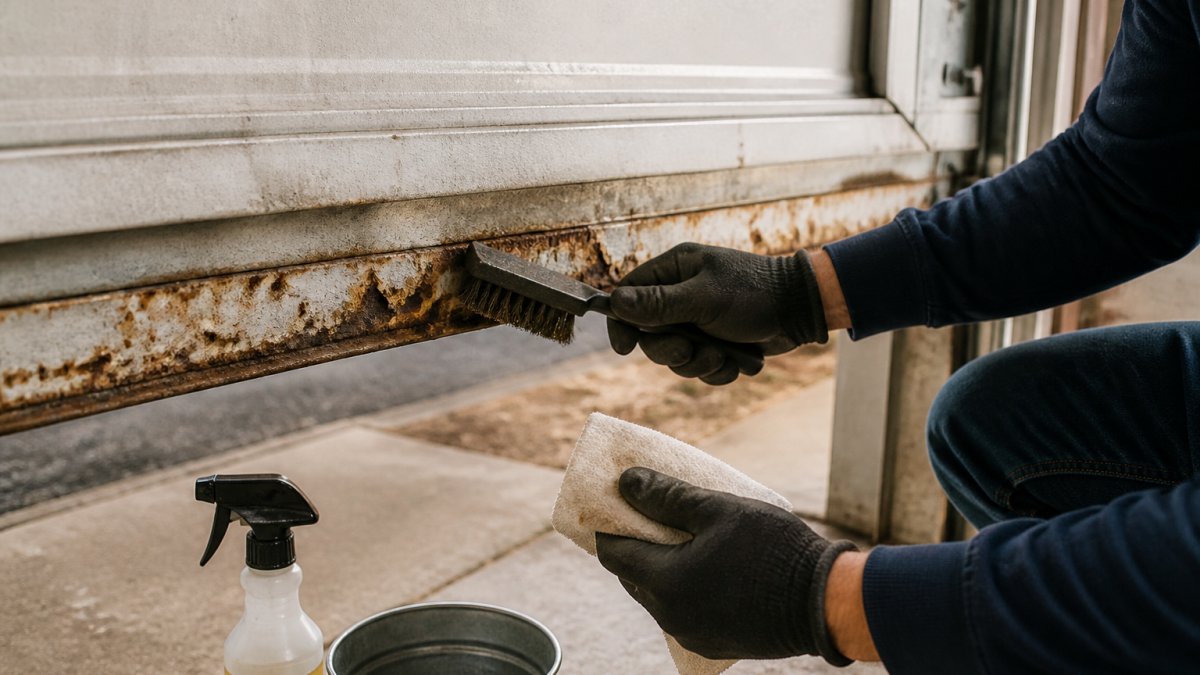
Check for hinges that wiggle by hand or show rust streaks. Corroded hinges can seize up and stop flexing. Don't tighten every bolt you see, over-tightening can strip the metal and make it worse.
Cable and Spring Problems
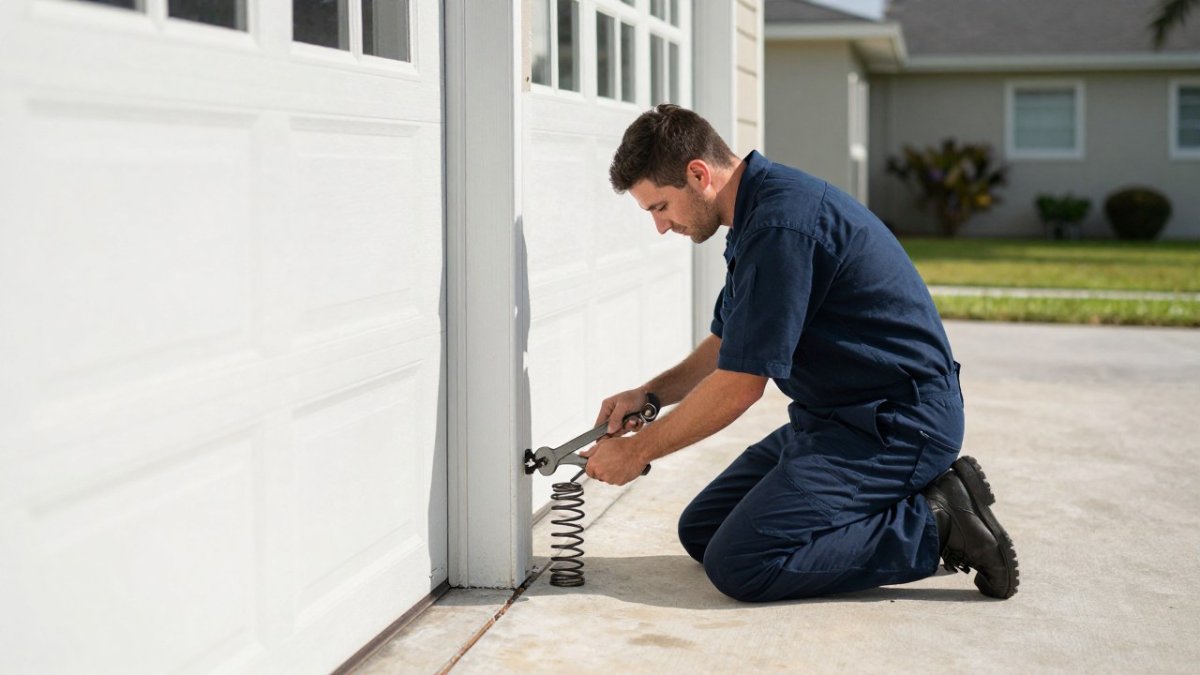
The cables and springs carry the door's full weight. A snapped cable or a broken spring on one side lets that corner drop. This is the most dangerous cause on the list.
Watch out: torsion springs and cables sit under extreme tension. Never adjust, cut, or remove them yourself, this is a job for a trained technician with the right tools.
If you see a frayed cable or a spring with a visible gap, stop using the door. For cable and roller issues, you can see cable and roller repair options for the Tampa Bay area. If the diagnosis points to a spring, garage door spring repair covers torsion and extension springs.
Tampa Conditions That Make a Garage Door Crooked
Living near the coast speeds up wear on every moving part. Salt air corrodes hinges, rollers, and cables faster than in drier climates. That corrosion throws off garage door alignment long before the parts look obviously broken.
Heat and humidity add to it: metal expands, lubricant dries out, and wooden panels can warp. Add afternoon storms, and the door shifts a little more each season.
Safe Diagnostic Checklist: Inspect the Door While It Is Closed
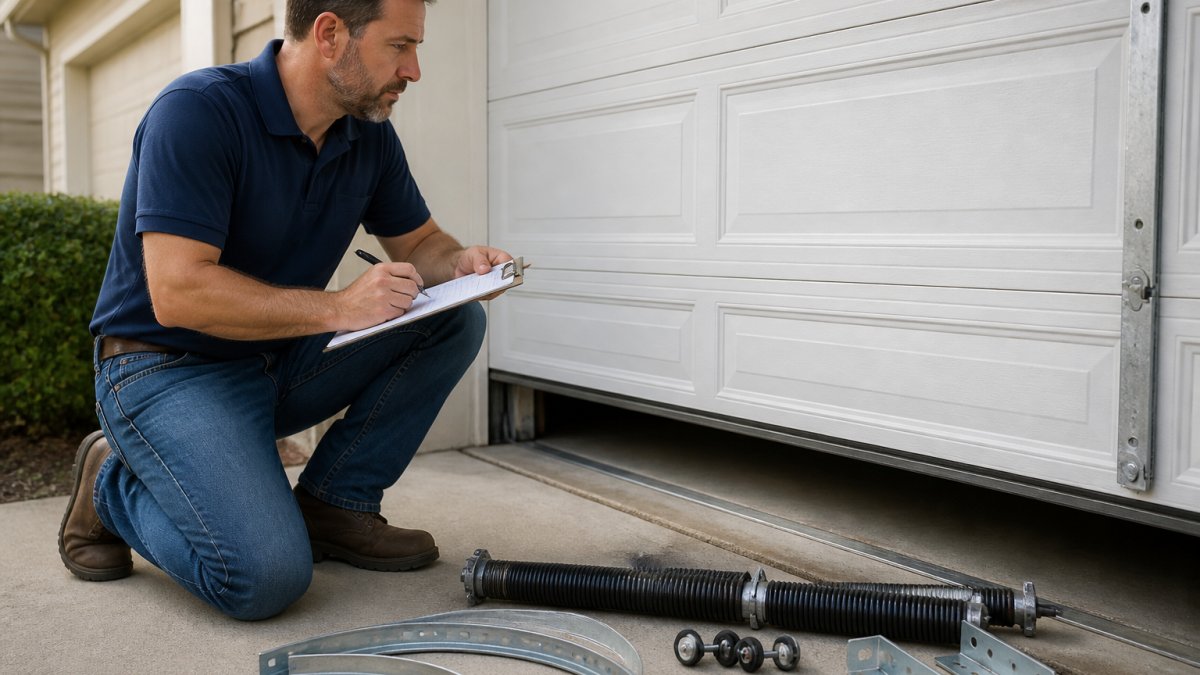
Start with the door fully closed and the opener unplugged. You can spot most alignment problems without touching a high-tension part. The goal is to sort the symptom into one of three buckets: the opening or floor is out of level, the door or its hardware is out of line, or a high-tension part has failed.
Here is a checklist to run first, in order:
- Look for a gap at one bottom corner
- Check if the door looks level across the top
- Scan hinges for rust, wiggle, or missing bolts
Decision Tree: Floor, Door, or High-Tension Part?
Use the closed-door observations to route the problem before you touch a tool.
- Gap is even on both sides and the door looks level across the top. The floor or opening has settled, a threshold or seal issue, not alignment. A weather seal can close a small even gap safely; a large gap or dropped concrete is a pro job.
- Gap is worse at one corner, but the door moves smoothly by hand and no cable or spring looks damaged. The door or hardware is out of line, a loose hinge, worn roller, or slightly bent track. Tighten only what is loose, and stop if a bolt strips or a track will not straighten.
- One side drops fast, the door falls when you let go, or you see a frayed cable or a spring with a visible gap. A high-tension part has likely failed. Stop using the door and do not adjust, cut, or remove cables or springs.
A door that binds halfway up is usually a roller or track problem, while a door that sags at one corner is a hinge or spring problem. The decision tree keeps you from adjusting the wrong part.
Stop-Use Warnings and DIY Boundaries
Torsion springs and cables sit under extreme tension. Never adjust, cut, or remove them yourself, this is a job for a trained technician. Stop using the door and call a pro if you see any of these:
- A broken spring or a gap in the spring coil
- A snapped or unspooled cable
- A door that is off its track or hanging by one side
Safe for most homeowners: visual inspection with the door closed and opener unplugged, tightening a loose hinge bolt that is not stripped, clearing debris from a track, and replacing a weather seal on an even gap.
If you want a fuller walkthrough of what is safe to fix yourself, our DIY garage door troubleshooting guide spells out the line between a quick home fix and a pro job.
Door Balance and Weight Distribution
Door balance is how evenly the springs share the door's weight. An unbalanced door feels heavy on one side or will not stay halfway open. To test, lift the door by hand to waist height and let go, a balanced door stays put, one that drops or rises fast is out of balance. Do not stand under the door, and do not repeat the test if the door falls fast.
Rollers, Tracks, and Drum Alignment
Rollers should spin freely in the tracks. Worn rollers make the door drag and pull to one side, and bent tracks pinch rollers and force the door off its path. The cable drums at the top must also line up, if one drum has unspooled, that side drops. An unspooled drum is a high-tension failure: stop and call a pro rather than trying to respool it.
Garage Door Uneven at Bottom: Gaps, Floors, and Panels
A garage door uneven at bottom usually shows up as a gap at one corner. Sometimes the door is fine and the floor is the problem.
Other times the door is the issue: a warped panel or bent bottom section won't sit flat, and a single-bay door can sag in the middle if its springs are weak.
Here's how to tell them apart. Close the door and look at the gap. If it's the same on both sides, the floor has settled.
How to Fix an Uneven Garage Door Gap
The right fix depends on what is causing the gap, and so does the urgency. A small even gap from a settled floor can wait for a routine visit.
| Symptom | Likely Cause | DIY or Pro | Urgency |
|---|---|---|---|
| Even gap both sides | Settled floor | Pro (threshold seal or adjust) | Routine |
| Gap at one corner | Uneven door or hinge | Pro if springs involved | Soon |
| Door binds going up | Worn rollers or bent track | Pro | Soon |
| One side drops fast | Snapped cable or spring | Pro only | Stop use, call now |
| Door won't close fully | Misaligned track or opener limit | Pro | Soon |
A weather seal can close a small even gap safely. But if the gap comes from the door hanging crooked, a new seal just hides the real problem, fix the alignment first, then seal.
How Door Type Changes the Fix
The same symptom can point to different parts depending on the door. A torsion-spring door carries the weight on a shaft above the door, so a one-side drop often traces to a cable or drum on that side. An extension-spring door carries the weight on springs above the tracks, so a weak spring shows up as that corner sagging. Single-bay doors can sag in the middle when springs weaken, while double doors more often show a corner gap from a hinge or roller.
Repair Costs and What to Expect
Repair costs depend on the part and the door, so request a quote before work begins and confirm whether it includes a balance check and opener limit test. Corrosion can turn a simple hinge tightening into replacing worn rollers or cables, so a technician should show you the worn parts before adding them to the bill.
What Not to Do
Do not adjust the opener to force a crooked door closed, that wears out the motor and tracks and hides the real cause. Do not replace a seal over a one-corner gap and call it fixed. Do not respool a cable drum or adjust a spring to close a gap, those are high-tension jobs. If the gap came on suddenly or one side dropped fast, stop using the door and call a pro.
How to Fix a Crooked Garage Door Track
A bent track is one of the few problems you can sometimes spot and even correct yourself, if the bend is minor.
For a small dent, gently tap it back with a rubber mallet while the door is closed and the opener is off. Never force it.
Watch out: a door that's off its track can fall. For a door off its track, off-track repair gets it back on safely, often the same day.
How to Adjust a Garage Door to Close Completely
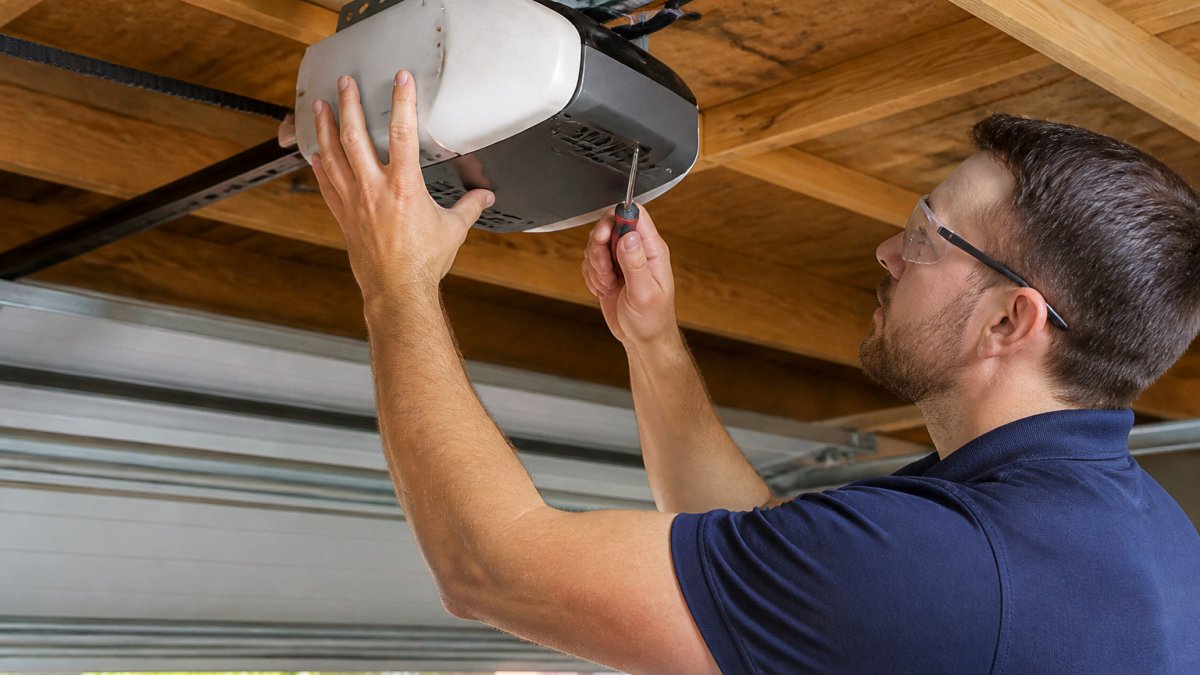
A door that won't close fully is often a limit-setting problem on the opener, not a track issue. The opener has travel limits that tell it where to stop.
You can adjust these limits on most openers with a screwdriver and the manual. Make small turns and test after each one.
Here's the rule we follow: fix the door's alignment first, then set the opener.
When to Stop and Call a Professional
Some jobs are safe to try. Others are not. Stop and call a pro if you see any of these:
- A broken spring or a gap in the spring coil
- A snapped or unspooled cable
- A door that's off its track or hanging by one side
These point to high-tension parts that can cause serious injury. A trained technician can diagnose the cause, fix it safely, and check the whole system at once.
Trinity Garage Door Service has been family owned and operated since 2007.
If your door is uneven and you're not sure why, don't guess. Tell us what needs fixing and request service.
An uneven garage door rarely fixes itself, and the longer you wait, the more parts wear out.
Frequently Asked Questions
Why is one side of my garage door higher than the other?
A single side riding high usually means the lifting hardware on that side is out of sync. The most common culprits are a stretched or unspooled cable, a broken torsion or extension spring on one side of a two-spring door, or a hinge that has pulled loose from the panel. On a two-spring door, one spring failing while the other still holds tension will pull the door up unevenly. Stop using the opener and have the door inspected before something else fails.
Can I adjust a garage door that is crooked myself?
You can safely handle a few things: tightening hinge bolts, clearing debris from the tracks, and adjusting the opener's travel limits so the door closes completely. Anything involving springs, cables, or the cable drums is a stop-use situation. Those parts hold enough tension to cause serious injury, and the springs on a standard door are under load even when the door is down. Leave spring and cable work to a licensed technician.
Why is my garage door uneven at the bottom?
A gap at the bottom is often not a door problem at all. Concrete garage floors settle over time, so the floor can dip a half inch or more under one corner while the door stays perfectly level. Check the bottom seal first, then look for a bent bottom panel or a roller that has jumped the track. If the door itself sits level but light shows through one corner, the fix may be a new bottom seal or a floor patch rather than a door adjustment.
When should I call a professional for an uneven garage door?
Call a professional the moment you see a snapped cable, a broken spring, a door that hangs by one side, or a track that has bent away from the jamb. These are high-tension failures, and running the opener can drop the door or damage the panels. A technician can confirm the cause and provide an upfront quote before work begins.